Every event calls for a different menu. A wedding needs food that photographs well and holds up through toasts. An office lunch needs to move fast and please a room full of different tastes. A backyard birthday needs food nobody has to think twice about eating with their hands.
We have built menus for all of it since 1988. Here is what actually works, broken down by occasion, with a few planning tips pulled from three decades of San Diego events.
Wedding Menu Ideas
Wedding menus carry more weight than any other event on this list. Guests remember the food. So does the couple, usually for years.
A few formats to consider:
- Plated dinners work best for formal receptions with a seated headcount. They give you the tightest control over presentation and pacing.
- Buffet stations move a crowd through faster and give guests choice without doubling your per-person cost. Multiple stations keep the line short even at 200 guests.
- Family-style service puts shared platters on the table and keeps the mood relaxed without sacrificing a plated feel.
The wedding bar deserves its own planning conversation. A signature cocktail named after the couple, a well-stocked wine and beer bar, and a clear cutoff time for last call all belong in the same conversation as the food menu, not an afterthought. Pair your bar plan with your dinner service style: a plated dinner usually calls for a hosted bar with table service, while a buffet or station setup works well with a self-serve bar guests can visit between courses. When you’re ready to pick a format, our wedding catering menu lays out buffet, family style, plated, and station service side by side
Planning tip: Book your tasting after you have settled on a service style, not before. The menu that tastes great on paper needs to work with your venue, your guest count, and your timeline.
See our full wedding catering options and bar services for more on building out the full reception.
Corporate and Office Menu Ideas
Office catering has one job: keep the room fed without derailing the meeting. That means fast setup, minimal mess, and food people can eat one-handed if they are still looking at a slide deck.
Reliable options for corporate events:
- Boxed lunches for meetings where people are eating at their desks or in a conference room between sessions.
- Sandwich and salad platters for a casual all-hands lunch where people can build their own plate.
- Hot buffet stations for longer events like all-day trainings or executive retreats where a warm meal keeps energy up through the afternoon.
Dietary variety matters more in an office setting than almost anywhere else. A team of 30 people usually includes a mix of vegetarian, vegan, and gluten-free eaters, and a menu that only offers one option for each group tends to run out fast or get ignored entirely.
Planning tip: Ask your caterer for a headcount-based dietary breakdown option instead of guessing. It keeps you from over-ordering one category and running short on another.
Full details on our corporate catering packages, including breakfast, lunch, and all-day meeting menus.
Birthday and Celebration Menu Ideas
Birthday menus have the most room to have fun. There is no formal service style requirement, no toast to time around, just a party that should feel like the honoree.
A few directions that work well:
- Themed buffet spreads built around the guest of honor’s favorite foods, from a taco bar to a build-your-own pasta station.
- Passed appetizers for a cocktail-style birthday party where guests mingle instead of sitting down to eat.
- A dessert table as the centerpiece, especially for milestone birthdays where the cake matters as much as the meal.
Outdoor birthday parties bring their own planning considerations. Food that holds up in the sun, easy cleanup, and a setup that does not require an indoor kitchen all shape the menu before flavor even enters the conversation.
Planning tip: Lock the guest count two weeks out if you can. Birthday parties tend to have more RSVP fluctuation than weddings or corporate events, and a firm headcount closer to the date keeps portions accurate.
Browse our full birthday party catering menu for more ideas by age and party style.
Buffet and Large-Group Menu Ideas
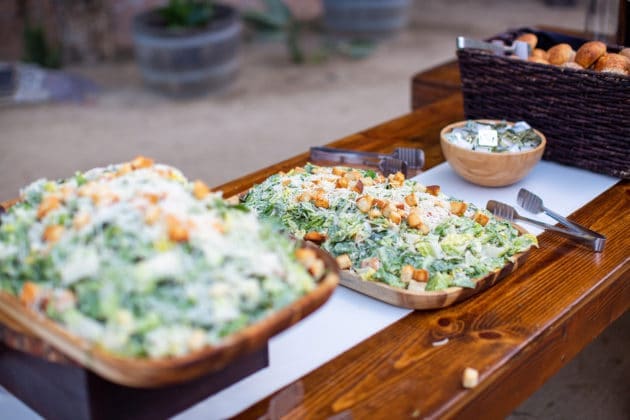
Buffets are the most requested format across every event type we cater, and for good reason. They scale from 20 guests to 500, control cost better than plated service, and give guests choice without complicating the kitchen.
The key to a buffet that works for a crowd:
- Multiple stations instead of one long line. Splitting mains, sides, and salads across separate tables keeps guests moving.
- Clear labeling for dietary needs, especially at large events where the host may not know every guest personally.
- A carving station or action station as a centerpiece when the budget allows. It adds visual interest and gives the buffet a focal point beyond the food itself.
Seasonal buffets bring their own menu logic. A cold buffet spread works well for a summer outdoor event, while a holiday buffet leans into heartier, warmer dishes built for a room where guests are staying longer. For more on planning a holiday-specific spread, see our Christmas party buffet ideas.
Planning tip: Plan on 1.5 servings per guest for a buffet, not 1. Buffet portions run smaller per trip through the line than a plated dinner, and guests often go back for seconds.
Budget-Friendly Menu Ideas
A tight budget does not have to mean a forgettable menu. The trick is spending on the dishes guests notice most and simplifying everywhere else.
Ways to stretch a catering budget without it showing:
- Lean into seasonal ingredients. They cost less and taste better than out-of-season substitutes.
- Choose one or two standout dishes and build the rest of the menu around simpler, less labor-intensive sides.
- Skip the passed appetizers in favor of a single strong stationary display. It cuts staffing costs without cutting the food guests actually remember.
- Buffet over plated. A buffet needs less serving staff per guest, which is often where the real savings show up.
Planning tip: Ask for a custom quote before ruling out a format you assume is out of budget. Guest count, menu, and staffing all move the number more than the service style itself.
Planning Your Menu: A Few Universal Rules
A few things hold true no matter the occasion:
- Start with the guest list, not the menu. Dietary needs, age range, and formality should shape the food, not the other way around.
- Match the menu to the service style early. A plated dinner and a taco bar need different kitchen setups, staffing, and timelines, so lock the format before you fall in love with a specific dish.
- Build in one or two showstopper items. Guests remember one or two standout dishes far more than a long list of decent ones.
- Confirm your final count close to the event. Whether it is a wedding or a birthday party, headcount accuracy close to the date keeps your menu on budget.
We have built menus for every occasion on this list since 1988. Send us your date, headcount, venue, and menu direction, and we will put together a custom quote built around your event.
Menu Planning Questions, Answered
How do I choose the right catering menu for my event?
Start with your guest list and service style, not the dishes themselves. A formal seated dinner calls for a different menu than a casual buffet, and dietary needs across your guest list will shape what makes the final cut. Once you know the format, we can help narrow the menu from there.
How many main dishes should a catering menu include?
Most buffets work well with 2 main dishes and 2 to 3 sides, which gives guests choice without slowing down the line. Plated dinners typically offer 1 to 2 entree choices selected in advance, sometimes with a vegetarian option added automatically.
Can my catering menu accommodate dietary restrictions?
Yes. Vegetarian, vegan, gluten-free, and other dietary accommodations can be built into any menu on this list. Visit our specialty diet catering page for more on how we handle allergies and dietary needs across event types.
Is a buffet cheaper than a plated dinner?
Buffet service is typically more budget-friendly than a plated dinner because it needs less serving staff per guest, though final pricing depends on menu, guest count, and staffing. We put together a custom quote once we know your event details.
How far in advance should I finalize my catering menu?
For weddings and large events, we recommend finalizing your menu 4 to 6 weeks before the date. Smaller events like office lunches or birthday parties can often finalize with 1 to 2 weeks notice, though earlier is always easier on availability.
Do you offer tastings before we commit to a menu?
Yes, tastings are available for weddings and larger events so you can confirm flavors and presentation before the big day. Reach out with your date and event type and we will get a tasting scheduled.